Water Damage Restoration
Rebuild and restore affected areas after drying, including replacing drywall, flooring, trim, and finishes so the space is back to normal.
Serving Denver, Colorado & surrounding areas
24/7 Emergency Response
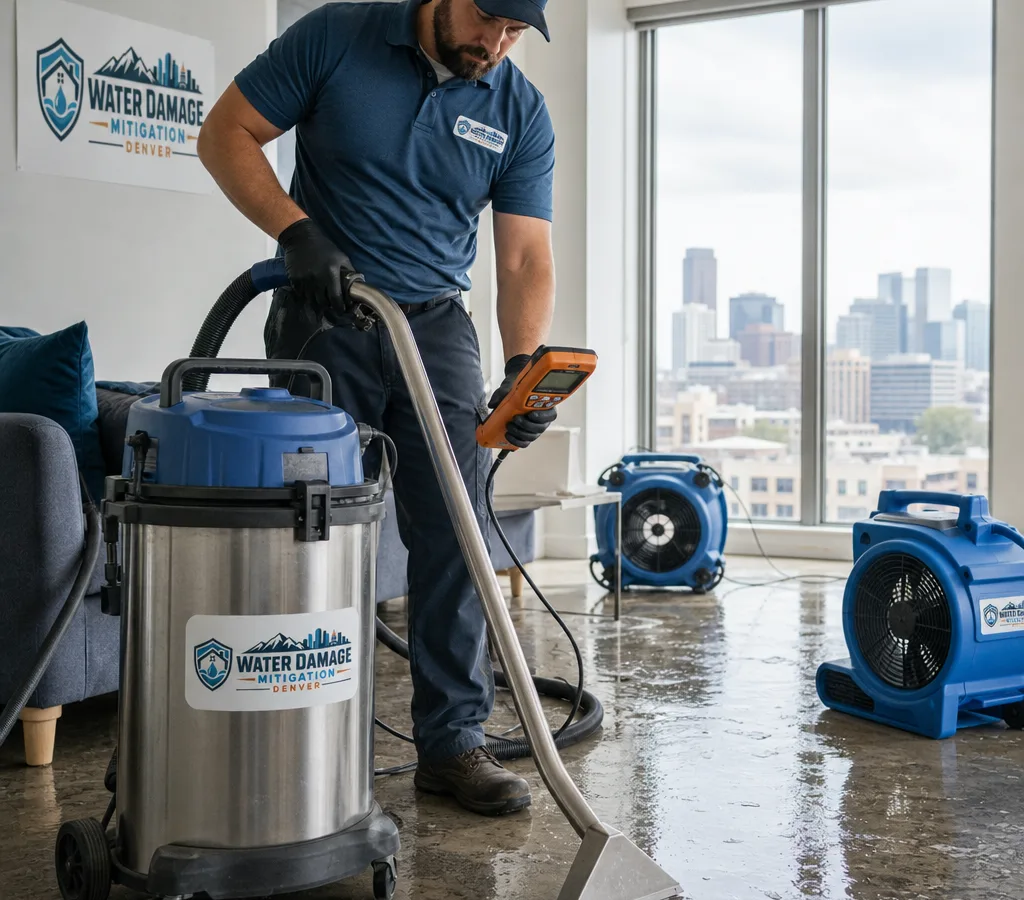
Fast cleanup, drying and documentation in Denver
Fast cleanup, drying, and documentation to limit damage after a leak, burst pipe, or overflow. Get a clear plan, the right equipment on site, and careful work that protects floors, walls, and air quality.
✓Moisture inspection
✓Commercial drying
✓Material protection
✓Written documentation
Act before moisture spreads
Water problems move fast. In a matter of hours, wet drywall swells, hardwood cups, and moisture travels into baseboards, insulation, and subfloors. Water Damage Mitigation Denver focuses on the first, most time-sensitive phase: stopping the spread, pulling out water, and getting materials to a verified dry standard.
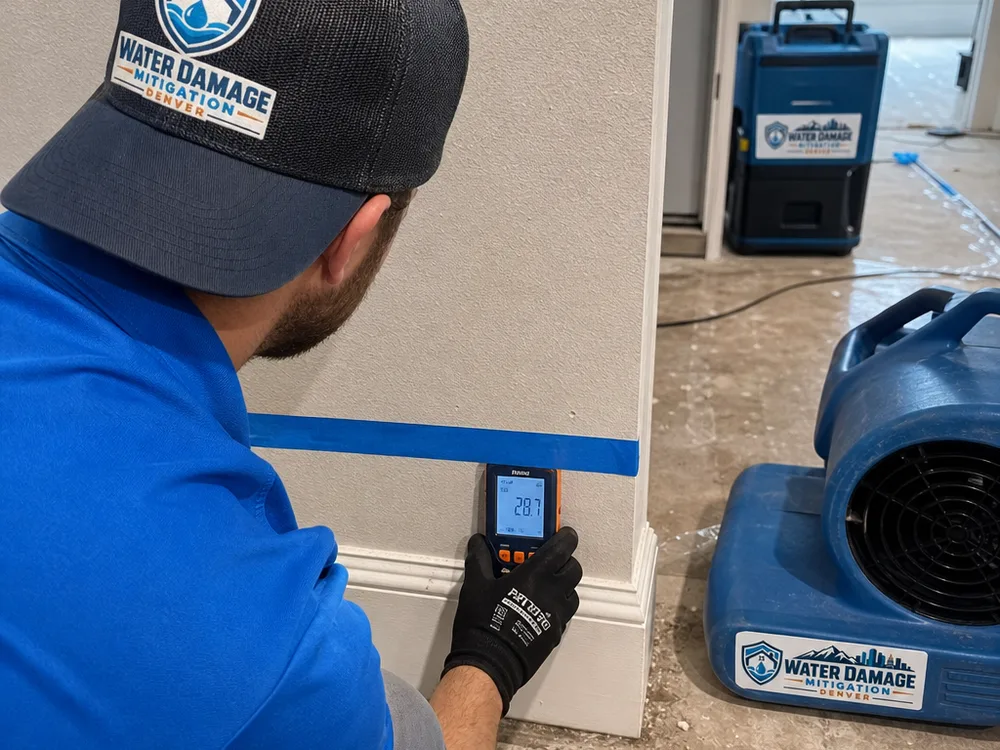
Our water damage mitigation Denver service starts with a moisture inspection—not just what you can see. We identify the water source, map wet areas with meters and thermal imaging when appropriate, and set up commercial drying equipment sized for the space. Throughout the job, we monitor humidity and material moisture so the drying plan stays on track.
If the water is contaminated, such as a sewer backup, we use containment and safe handling methods to reduce cross-contamination. If materials cannot be saved, we document why and remove them cleanly so the property can move to repair and restoration without delays.
Cleanup through recovery
Rebuild and restore affected areas after drying, including replacing drywall, flooring, trim, and finishes so the space is back to normal.
Targeted repairs for materials harmed by water, from drywall and baseboards to subfloor sections, with an emphasis on fixing what caused the loss.
Professional sampling and inspection to confirm whether mold is present, identify likely sources, and document conditions for a clear plan.
Containment, removal, and cleanup for mold-affected materials, followed by verification steps so the area is safe to rebuild.
Measured, controlled and documented
We measure wet materials and track drying progress so you know what is affected and what is already dry.
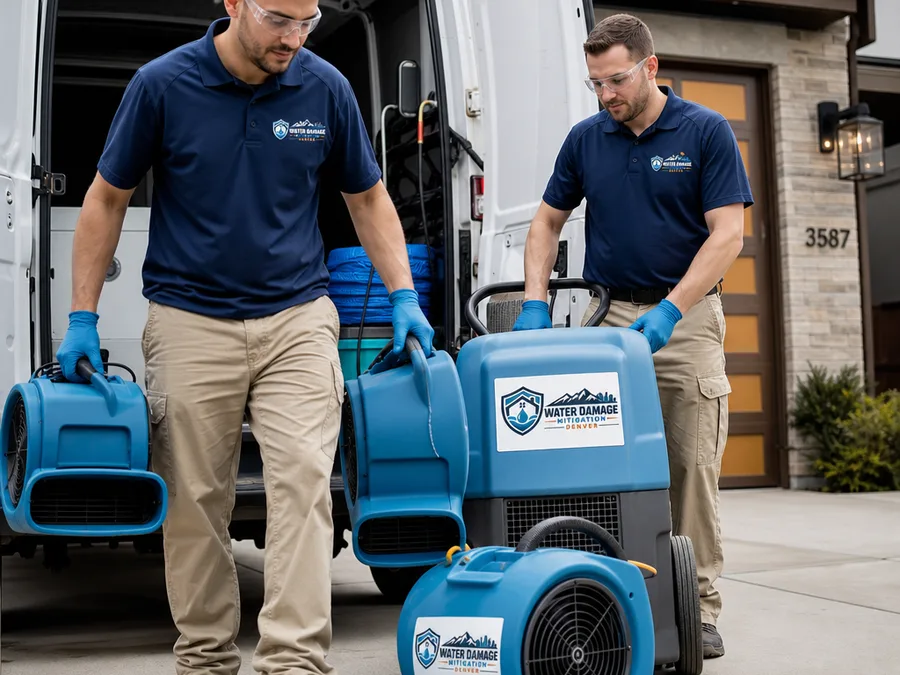
Air movers and dehumidifiers are sized to the loss, the layout, and the season so drying is efficient and controlled.
For unsanitary water or suspected microbial growth, we isolate work areas to help protect the rest of the home.
Photos, readings, and a written scope support insurance claims and reduce back-and-forth during the process.
We aim to save what can be saved, and remove only what cannot be dried or cleaned safely.
Local plans for Denver properties
Water Damage Mitigation Denver is a local Denver, CO team focused on the urgent phase after water intrusion. Our work is built around three priorities: limit damage quickly, dry to a verified standard, and keep the process clear for the property owner.
We handle common residential and light commercial situations across the city, including supply line leaks, burst pipes during cold snaps, water heater failures, appliance overflows, and storm-related water entry. Denver's mix of older homes and newer builds means water can show up in very different ways, from plaster walls and original hardwood to modern open-plan basements. We adapt the drying plan to the structure instead of forcing a one-size setup.
If you are dealing with an insurance claim, we can provide the job notes and documentation adjusters usually ask for. If you are paying out of pocket, you will still get a written scope and straightforward options before any work starts.
Straightforward scope and pricing
Water damage mitigation in Denver typically ranges from about $1,000 to $5,000 for many residential jobs, with small, contained losses sometimes closer to $500 to $1,500 and larger multi-room or basement losses often $3,000 to $10,000+.
Final pricing depends on how far water traveled, the category of water—clean versus contaminated—how much demolition is required, equipment days, access to affected areas, and whether contents need handling. The exact cost is confirmed after an on-site moisture inspection and written scope.
We help confirm the water source is controlled, then inspect the visible and hidden wet areas using moisture meters and room readings.
Standing water is removed first. We take steps to protect salvageable flooring, trim, and contents while the drying plan is set.
We place air movers and dehumidifiers to create airflow across wet materials. If needed, we install containment for unsanitary water situations.
We record moisture readings and adjust equipment placement as conditions change, then confirm drying targets before equipment is removed.
If you have water in floors or walls, the next step is a moisture inspection and a written drying plan so you can make the right call quickly.
Call for Emergency HelpDenver-area response
We provide water mitigation Denver CO property owners rely on across central Denver and nearby areas, with drying plans tailored to the housing style and common layouts in each part of the city.
Request Emergency ServiceClear answers before work begins
We prioritize active water losses and time-sensitive drying, and we will tell you the earliest arrival window when you reach out. In Denver, delays can mean moisture migrates into drywall and subfloors, so the goal is to get extraction and dehumidification started as soon as practical.
Shut off the water source if it is safe, and avoid running HVAC if you suspect contaminated water. If you can do so safely, move small items off wet flooring, place aluminum foil or wood blocks under furniture legs, and do not pull up flooring or open walls unless directed, since that can spread moisture and debris.
Yes, we can provide photos, moisture readings, and a written scope that insurers typically request for water mitigation documentation. You stay in control of decisions, and we can coordinate the details needed for adjuster review without turning the job into a guessing game.
Sometimes, yes, when materials cannot dry effectively or when trapped moisture creates risk in wall cavities or under floors. We explain what needs removal and why, then document affected areas so the next repair phase can move forward cleanly.
Category 2 or 3 water requires a different approach: containment, protective equipment, careful removal of impacted porous materials, and cleaning with appropriate antimicrobial steps. The goal is to reduce cross-contamination and leave the area safe for repairs.
Yes, we can still inspect and build a plan, but the priorities may change after a delay. If materials stayed wet, we focus on identifying what is still damp, addressing odors or microbial risk, and documenting conditions so you know what can be dried versus what should be removed.
Describe what happened and where the water is showing up. We will schedule a moisture inspection, explain next steps, and provide a clear scope for cleanup and drying.