
Post-leak and post-flood concerns
If drywall, carpet pad, or framing stayed damp, we can document conditions and sample to guide a targeted cleanup plan.
Serving Denver, Colorado & surrounding areas
24/7 Emergency Response
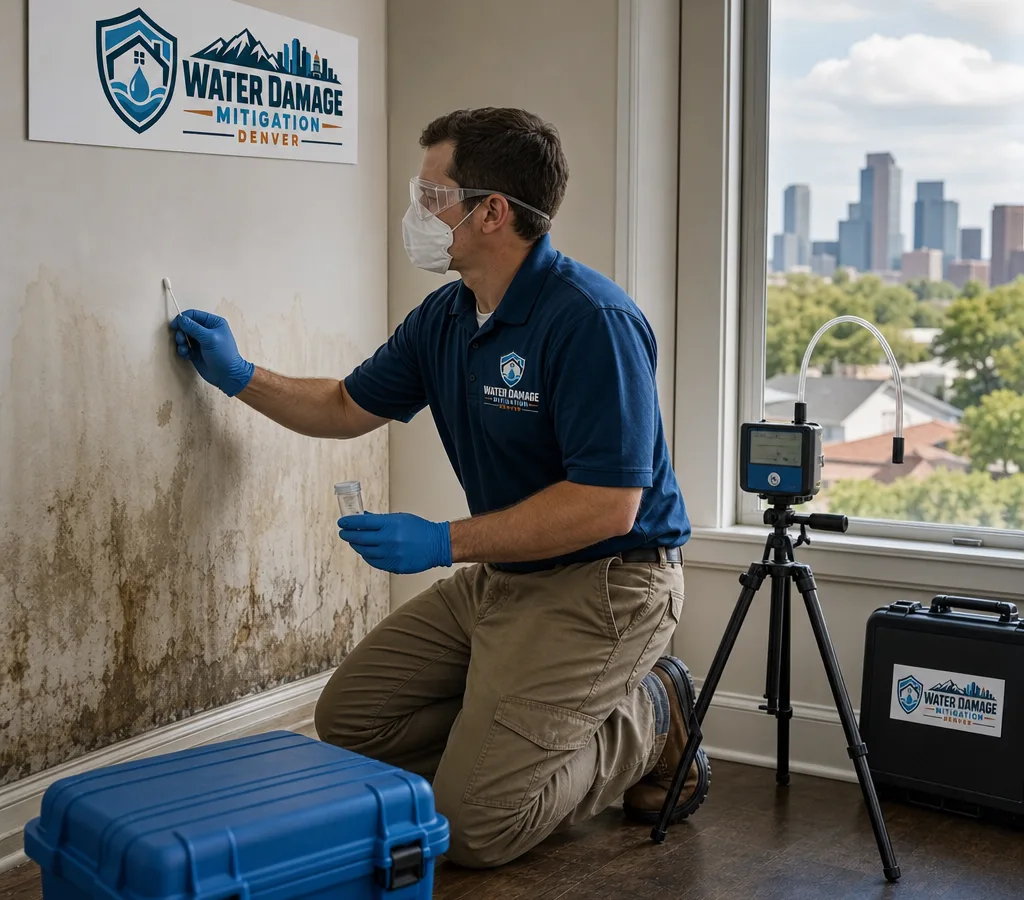
Mold testing in Denver, Colorado
Fast scheduling, clear lab results, and a written plan you can use for cleanup, repairs, or a property transaction.
✓Moisture mapping
✓Targeted sampling
✓Lab results
✓Written next steps
Test when the result will guide a decision
If you're searching for mold testing Denver, you usually have one of three problems: a musty odor you can't locate, visible growth that you want identified and documented, or a recent leak where you need to know what's in the air and what's in the building materials.
Mold testing is most useful when it answers a decision:
There are also times testing is not the first step. If you have obvious active growth on building materials, the immediate priority is to stop the moisture source and remove or clean affected materials using proper containment. Sampling may still be appropriate for documentation, but it is not a substitute for fixing the moisture problem.
Inspection, sampling, and usable documentation
A good inspection is more than taking a couple of air samples. Our mold testing work for Denver properties is built around a clear scope, careful documentation, and results you can act on.
Typical deliverables include:
Denver's dry climate can still produce mold when moisture is trapped. Basements, bathrooms, laundry areas, and cavities that stayed wet after a leak are common trouble spots, especially in older housing where small leaks can persist unnoticed.
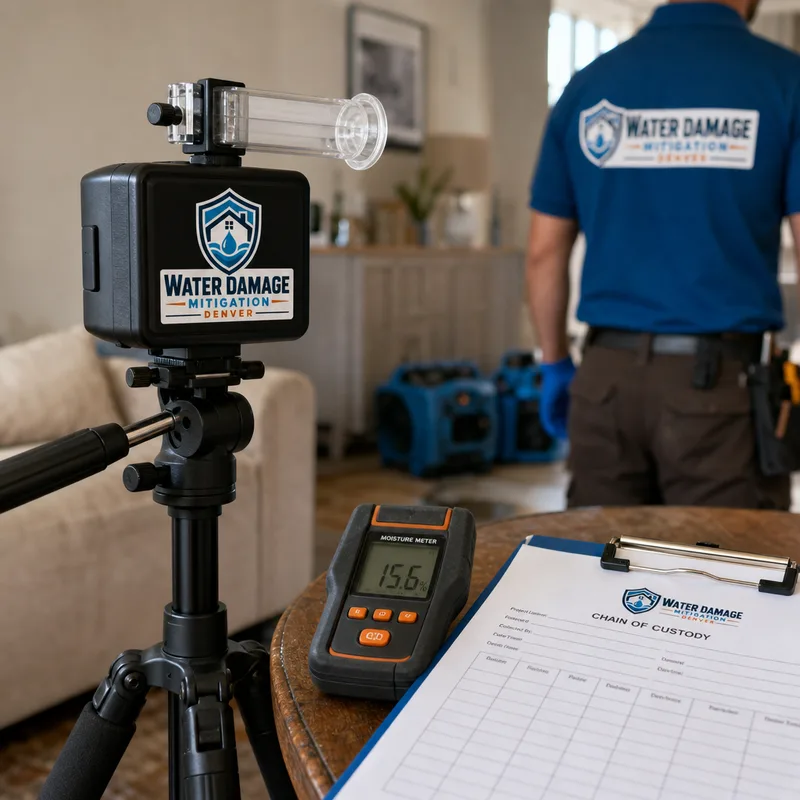
Testing matched to the property condition
If drywall, carpet pad, or framing stayed damp, we can document conditions and sample to guide a targeted cleanup plan.
We focus on moisture mapping first, then sample strategically so results point you toward the most likely cavity or material.
Below-grade spaces can hold humidity around foundation walls and stored items; we compare indoor results to an outdoor control to reduce false alarms.
Small roof leaks and ventilation issues can affect sheathing and insulation; sampling and photos help confirm the extent.
We document zones, pressure relationships, and HVAC influence so property managers can plan containment and communicate clearly with occupants.
We ask what happened—such as a leak, odor, visible growth, or recent repairs—which areas are affected, and whether anyone has sensitivities so we can plan sampling and PPE.
We walk the space, check likely moisture sources, and use meters to narrow down wet or previously wet materials before choosing sampling locations.
We collect only the samples that fit the question you're trying to answer, label everything, and document locations with notes and photos for a defensible report.
Samples go to a qualified lab with chain-of-custody documentation. You receive results plus a summary that explains what the numbers mean in context.
If results indicate a problem, we outline practical next steps such as containment needs, removal or cleaning methods, and what to fix so mold doesn't return.
Clear sampling scope and pricing
Mold testing in Denver typically ranges from about $300 to $900 for an inspection with a small set of samples, depending on the size of the property and how many areas need to be tested. A basic visit often includes an outdoor control sample and one or two indoor samples; larger homes, multi-level basements, or situations needing multiple rooms and surface samples can run higher.
Your final price depends on sample count, access to crawlspaces or attics, urgency, and whether you need documentation for a transaction or post-remediation clearance. Exact cost is confirmed after we review your concerns and the sampling plan for your property.
If you've had a leak, see staining, or smell a musty odor, start with an inspection that ties lab results to the actual moisture source so you're not guessing on next steps.
Call for Emergency HelpMoisture patterns shaped by Denver properties
Mold needs moisture, and Denver properties usually run into mold because water got into a material and stayed there, not because the outdoor air is humid year-round.
A few Denver-specific patterns we see:
We also account for elevation and seasonality. During colder months, condensation and ice-related roof issues can introduce moisture into attics and wall cavities. In warmer months, evaporative coolers and HVAC condensation lines can create localized moisture when drains clog or components are misrouted.
If your concern started with a water event, our team at Water Damage Mitigation Denver can help you connect the dots between what got wet, what dried, and what should be opened or removed based on what the inspection shows.
Clear answers before sampling
Scheduling depends on current demand and the urgency of your situation, but many inspections can be set up quickly when there is an active leak, a recent water event, or a real estate deadline. Share your timeline and which areas are affected, and we'll confirm the earliest appointment window and what to do in the meantime, such as keeping the area dry and avoiding disturbing suspect materials.
In most cases, yes, because an outdoor control helps interpret indoor air results in context. Denver's outdoor spore levels change day to day, so comparing indoors to outdoors makes the findings more meaningful than looking at an indoor number by itself.
You can often narrow down a suspect area with moisture mapping, thermal observations, and targeted sampling near the cavity, but you cannot directly sample mold growing on hidden framing without access. If results and moisture readings point strongly to a wall or ceiling cavity, the most reliable next step is a small, controlled opening so conditions can be confirmed and addressed correctly.
Air sampling can be useful for understanding exposure and comparing rooms, but it is not a stand-alone answer for every case. Surface or material sampling, moisture readings, and visual conditions matter because mold can be present on a material even when air results look normal at that moment.
Keep the area as undisturbed as possible, avoid running air purifiers in the suspect area right before sampling, and do not spray bleach or antimicrobials on visible growth if you want accurate surface results. If there is an active leak, stop the water source if safe to do so and document what happened, including when the water event started.
Yes. Clearance testing typically includes a visual check of work-area cleanliness and containment removal, plus air sampling in the remediated area compared to an outdoor control. The goal is to verify that the work area is clean and conditions are consistent with successful remediation before rebuild and re-occupancy.
Yes. The report should connect results to the likely moisture source and affected building materials, then outline practical next steps such as where containment is needed, which materials are likely candidates for removal, and what moisture problem has to be corrected to prevent recurrence.
Tell us what you're seeing or smelling and when it started. We'll schedule a Denver inspection, document conditions, and provide lab-backed results with a straightforward plan for what to do next.